


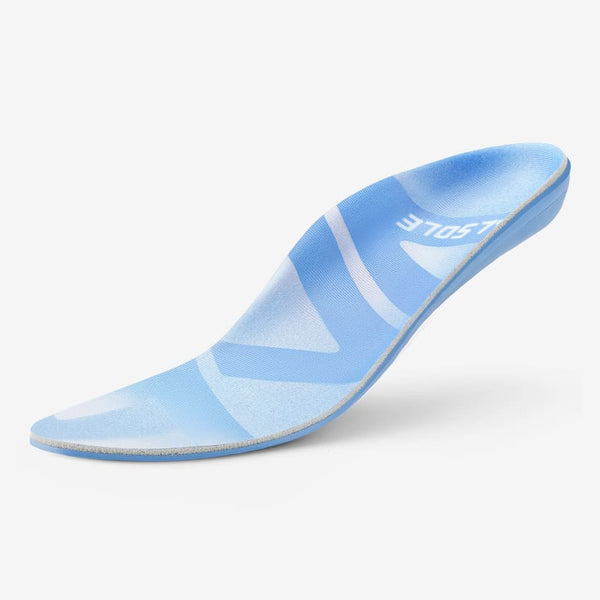
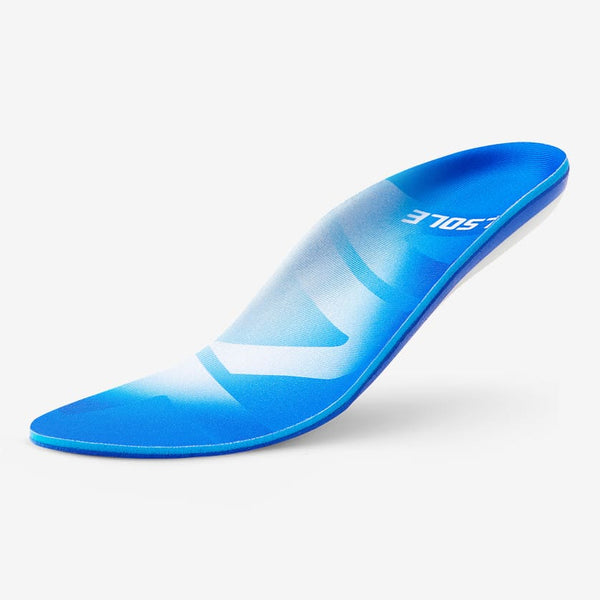
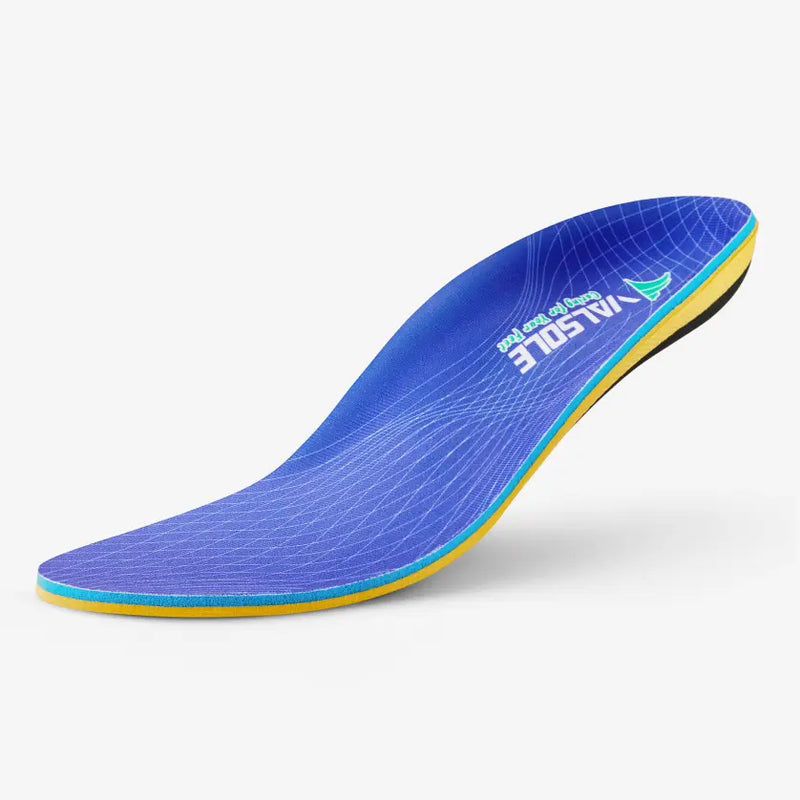


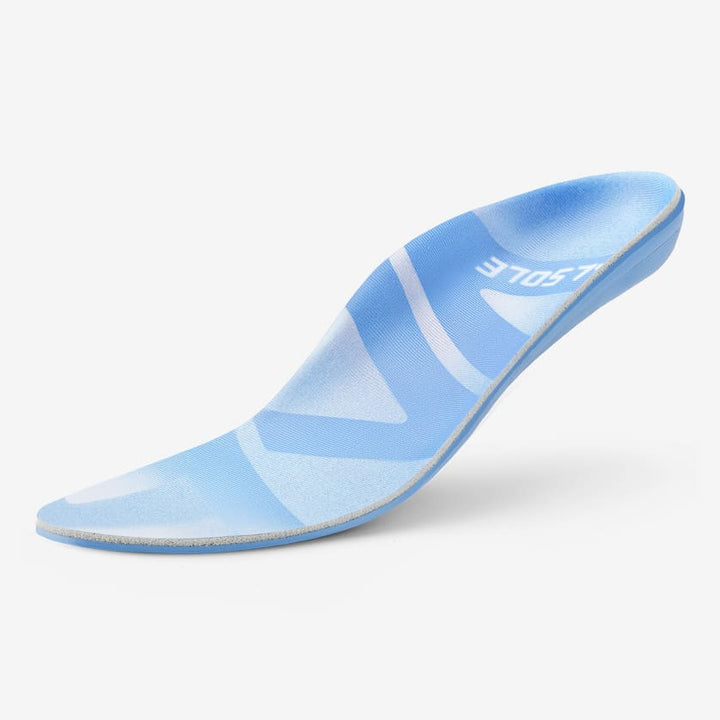
Fascia Soothe
Step into relief. VALSOLE Fascia Soothe insoles are purpose-built for people who know what...
$37.99$39.99
View product


Human posture and movement efficiency begin at the feet. Subtle misalignments such as overpronation or supination can disrupt the kinetic chain, affecting the knees, hips, and spine while diminishing performance and increasing injury risk. This article explores the biomechanics of postural alignment, the cascading effects of foot instability, and the corrective role of alignment insoles. By stabilizing the subtalar joint, redistributing plantar pressure, and enhancing shock absorption, modern insoles promote structural equilibrium and muscular efficiency. The result is improved posture, reduced strain, enhanced athletic performance, and long-term musculoskeletal resilience — achieved by optimizing the body’s foundation from the ground up.
Every human body is an architectural masterpiece—complex, dynamic, and astonishingly dependent on its base. Yet, few realize that the structure’s stability begins at the feet. Like the foundation of a building, the feet dictate how forces distribute throughout the body[1]. When this base falters, the entire structure suffers.
Misalignment at the foot level often remains imperceptible, quietly compromising balance, posture, and movement efficiency. Over time, subtle deviations such as overpronation or supination can distort the kinetic chain[2]—an interconnected sequence of joints and muscles extending from the soles to the skull[3]. The result is a gradual erosion of posture and performance, often misattributed to fatigue or aging rather than foundational imbalance.

Postural alignment is a symphony of joint positioning and muscular engagement. Each joint functions as a precise hinge in a continuous mechanical linkage. When aligned, this system allows energy to flow efficiently, reducing strain and maximizing stability. However, even a minor distortion at the foot can reverberate upward[4], influencing the orientation of the knees, hips, and spine.
Pronation—when the foot rolls inward excessively—causes internal rotation of the tibia, cascading into knee valgus and pelvic tilt[5]. Conversely, supination—an outward roll—restricts shock absorption, producing stiffness and imbalance[6]. Both deviations shift the body’s center of gravity, compelling compensatory adjustments that strain muscles and ligaments over time. These maladaptations reshape posture and diminish biomechanical efficiency.
The misaligned foot initiates a chain reaction[7]. Knees drift off-axis, hips rotate asymmetrically, and the spine compensates through curvature adjustments. Chronic tension develops, manifesting as lower back pain, neck stiffness[8], or even headaches. True postural correction thus begins not at the shoulders or core but at the very base—the feet.

Valsoles are not just insoles — they’re instruments of postural recalibration. Each design mirrors the foot’s natural contours, guiding it toward neutral alignment with every stride. By stabilizing the subtalar joint [9]— the pivotal axis of the ankle — Valsoles maintain harmony between mobility and rigidity, ensuring smooth load transfer and fluid movement from heel to toe.
With Valsoles, balance is engineered into every layer. Their advanced support structure redistributes plantar pressure evenly[10]across the heel, midfoot, and forefoot, eliminating hotspots and preventing strain. This even weight distribution promotes symmetrical muscle engagement and joint efficiency — retraining your posture for long-term comfort and stability.
Crafted with next-generation polymers and responsive foams[11], Valsoles adapt intuitively to your every motion. These intelligent materials absorb shock, respond dynamically to pressure, and propel your movement with energy return that feels both natural and powerful. The result is an unparalleled fusion of comfort, control, and enduring alignment — even under the most demanding conditions.
Proper alignment converts energy into motion with minimal waste[12]. When the feet align, muscle chains activate in harmonious sequence. Runners experience smoother transitions, lifters achieve firmer grounding, and office workers stand longer without fatigue. Each movement becomes biomechanically economical—an orchestration of stability and strength.
Malalignment breeds asymmetry, and asymmetry breeds injury. Alignment insoles mitigate these risks by restoring equilibrium. Reduced torque on joints minimizes microtrauma, while balanced foot mechanics diminish overuse conditions such as plantar fasciitis, knee tendinitis[13], and lower back strain. The correction is subtle yet transformative—proactive rather than reactive.
Alignment extends beyond the physical plane. Posture influences perception, confidence, and cognitive alertness[14]. A body in balance fosters a mind in focus. Athletes and professionals alike report heightened body awareness and movement precision when foundational alignment is optimized. In this synthesis of physiology and psychology, performance transcends mere mechanics.
Human posture begins where the body meets the earth. Alignment insoles are the quiet revolution beneath our feet—an interface that reconnects anatomy with engineering. By realigning the base, they recalibrate the entire human system, merging comfort with control, stability with motion.
To fix the foundation is to elevate the whole structure. In the emerging science of posture-centered design, the humble insole stands as both the simplest and most profound tool for reclaiming balance, resilience, and performance from the ground up.
[1] Ker, R. F., et al. (1987). The spring in the arch of the human foot. Nature.
[2] Hintermann, B., & Nigg, B. M. (1998). Pronation and supination biomechanics.
[3] Kendall, F. P., et al. (2005). Muscles: Testing and Function with Posture and Pain.
[4] Khamis, S., & Yizhar, Z. (2007). Effect of foot hyperpronation on pelvic alignment.
[5] Powers, C. M. (2010). The influence of abnormal hip mechanics on knee injury.
[6] Nigg, B. M. (2010). Biomechanics of Sport Shoes.
[7] Resende, R. A., et al. (2016). Foot posture influence on lower limb alignment.
[8] Rothbart, B. A., & Estabrook, L. (1988). Excessive pronation and chronic back pain.
[9] Kirby, K. A. (2001). Subtalar joint axis location and rotational equilibrium.
[10] Bonanno, D. R., et al. (2012). Effect of foot orthoses on plantar pressure.
[11] Verdejo, R., & Mills, N. J. (2004). Energy dissipation of cushioning materials.
[12] Nigg, B. M., et al. (2015). The preferred movement path paradigm.
[13] Cheung, R. T., & Ng, G. Y. (2007). Foot orthoses and plantar fascia strain.
[14] Peper, E., et al. (2017). Posture and mood influence.
Shop the products most relevant to the support path discussed in this article.

Keep reading with symptom-based guides and compare support options for your pain profile.


Loading size guide…


