




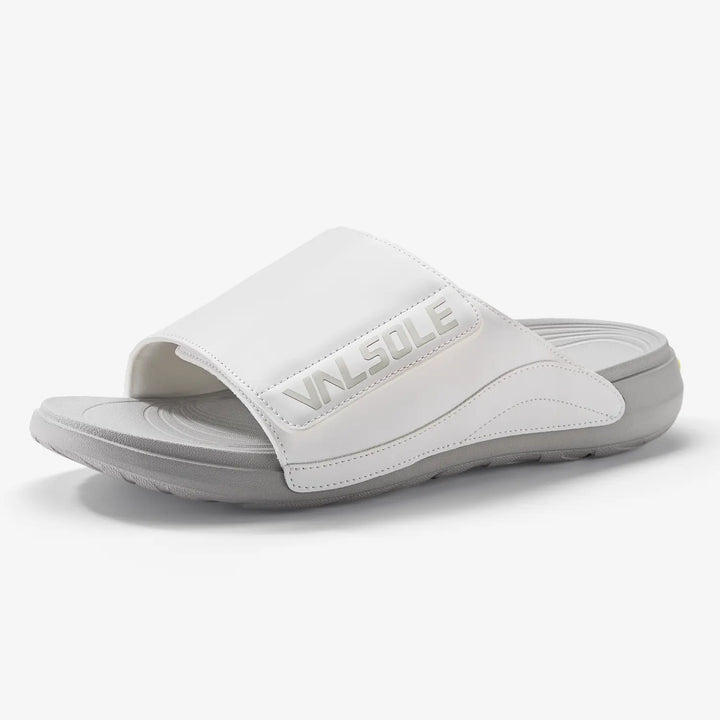
Recovery Slide
The VALSOLE Recovery Slide is engineered for everyday relief, combining ergonomic support with lightweight...
$69.99$109.99
View product


Nurse foot pain remains one of the most practical support problems in healthcare work. The reason is simple: long standing periods, repeated walking, and hard hospital floors create a load pattern that accumulates over a shift. Even when symptoms feel manageable at first, fatigue tends to stack by late shift and spill into recovery hours afterward. That is why this topic continues to appear in both search behavior and workplace health reporting.
If a problem repeats every day, support strategy matters more than short-term comfort hacks.
Across clinical and occupational reporting, lower-limb discomfort in nursing work is frequently linked to prolonged standing and repetitive movement demands. While exact rates vary by setting, the pattern is consistent: feet and ankles are part of the highest-burden zones during long shifts. This is not only a footwear category story. It is a workload and recovery story where support quality can change how force is managed through the day.
Better support does not remove shift load, but it can reduce how harshly that load accumulates.
Hard flooring increases the importance of pressure diffusion and stable contact. As shift duration rises, small inefficiencies in support become bigger by the final hours. That is why many nurses report that shoes feeling “fine” early in a shift still lead to soreness later. The practical issue is often support consistency over time, not first-step cushioning alone.
For long healthcare shifts, predictable support behavior usually beats ultra-soft feel.
A useful framework is to separate in-shoe support from after-shift recovery support. During work, stable insole structure and heel control can help reduce repeated correction effort. After work, recovery footwear can lower late-day pressure stress on home hard floors. These roles are complementary. They are not mutually exclusive. The most durable routine is usually a work phase plus recovery phase setup.
Shoppers make faster decisions when each product path has one clear job.
Start with symptom timing. If pain climbs mainly during shift hours, prioritize in-shoe support first. If symptoms spike after shift on home floors, add a recovery-footwear layer for decompression. If both are true, run a two-step setup for two weeks and compare end-of-day fatigue. Practical comparison beats guesswork and helps identify which layer is doing the heavy lifting.
The right setup is the one that keeps late-shift stability and post-shift recovery both manageable.
Begin with the Nurses Foot Support Guide, then compare workday support paths in the Insoles Complete Guide. If after-shift hard-floor soreness remains strong, use a recovery layer such as Recovery Slide to reduce carryover fatigue.
Shop the products most relevant to the support path discussed in this article.
Keep reading with symptom-based guides and compare support options for your pain profile.


Loading size guide…


