

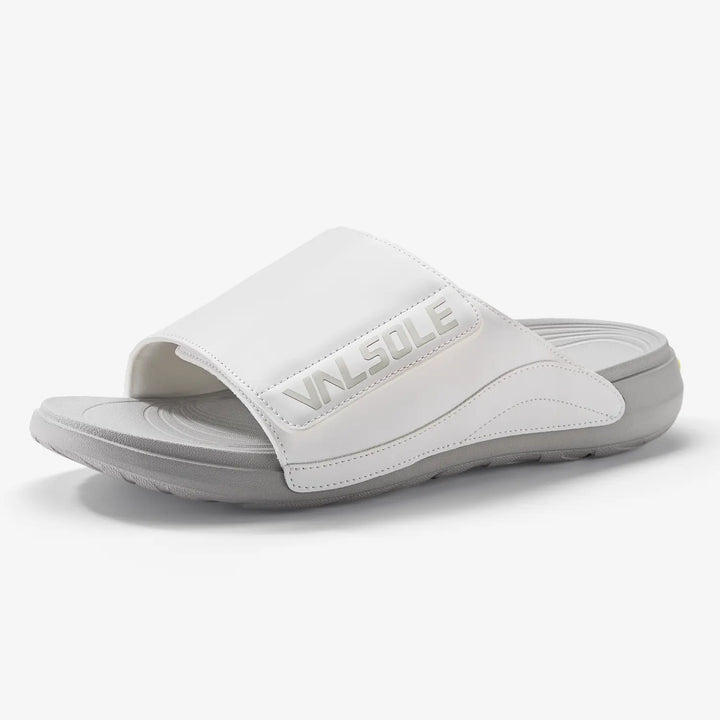
Recovery Slide
The VALSOLE Recovery Slide is engineered for everyday relief, combining ergonomic support with lightweight...
$69.99$109.99
View product

For work shoes, arch support works best when the insert fits the shoe as carefully as it supports the foot. If work shoes need support without crowding the forefoot, compare arch level, heel seating, shoe volume, and late-shift stability instead of choosing by first-step softness alone.
The practical goal is not to make one product sound universal. It is to match the support route to your shoe, floor, and daily routine so the setup still feels useful late in the day.
Ahrefs MCP export from June 23, 2026 supported this cluster through "arch support insoles" with volume Ahrefs related cluster, KD 0, CPC cluster-informed, and position cluster. GSC evidence was unavailable. No GSC clicks, impressions, CTR, or average position were used. This article fills a daily schedule gap while staying inside VALSOLE's upper category language: shoe insoles, arch support insoles, work shoe inserts, and recovery footwear.
Workplace guidance from CCOHS notes that regular standing work can be associated with sore feet, muscular fatigue, leg swelling, and low back discomfort. That makes fit, floor surface, and footwear support useful decision criteria for shoppers comparing daily comfort options.
| Signal | What it may mean | What to compare | VALSOLE route |
|---|---|---|---|
| Support fades late in the day | The insert may be compressing too much | Shape retention and stable arch feel | Stable Support insole |
| Hard floors make the whole foot tired | Floor load and repeated standing are building together | Hard-floor structure and heel stability | Concrete Floor Insoles |
| Heel discomfort appears first | The heel may need more focused support | Heel cup shape and pressure distribution | Heel Relief insole |
| The shoe feels tighter after adding support | The shoe may not have enough internal volume | Toe space, sockliner removal, and heel seating | Size guide |
| Feet feel tired after work shoes come off | Home floors may need a support route too | Recovery footwear and stable home support | Recovery Slide |
The most common mistake is confusing cushioning with support. Cushioning can make the first step feel softer, but long days usually test whether the product keeps shape, keeps the heel seated, and fits without crowding the shoe.
Start with Arch support guide because it matches the main intent behind this article. Then compare Stable Support insole if the problem pattern points toward that product. If you need to compare several support levels, use the Insoles collection as the broader category route.
Before wearing a new setup for a full shift, check the Size guide and the Arch support guide. For related long-shift context, review Best Insoles for Standing All Day at Work and Best Insoles for Standing All Day: Late-Shift Support Guide.
Foot support products can help with comfort, cushioning, fit, and daily pressure distribution, but they are not medical care. If foot pain is sudden, severe, persistent, worsening, linked to swelling, numbness, tingling, injury, an open wound, signs of infection, or difficulty bearing weight, readers should consult a qualified medical professional. People with diabetes or circulation concerns should be especially cautious with new or worsening foot symptoms.
Not automatically. Softness can help first-step comfort, but support retention, heel seating, and shoe fit usually decide whether the setup works through a long day.
Check toe space, heel seating, and whether the shoe feels tighter after the insert is added. If the original sockliner is removable, compare fit with and without it.
Sometimes, but not always. Work boots, sneakers, clogs, and house footwear can have very different internal volume and heel geometry.
Stop relying on product changes alone and seek professional care if discomfort is severe, sudden, worsening, persistent, or linked to swelling, numbness, injury, or difficulty bearing weight.
This article was prepared using VALSOLE's Ahrefs MCP export from June 23, 2026. GSC evidence was unavailable and was not used for clicks, impressions, CTR, or average position.
External references reviewed: Canadian Centre for Occupational Health and Safety, Working in a Standing Position - Basic Information; Canadian Centre for Occupational Health and Safety, Foot Comfort and Safety at Work; Mayo Clinic, Foot pain - When to see a doctor.
Shop the products most relevant to the support path discussed in this article.


Keep reading with symptom-based guides and compare support options for your pain profile.


Loading size guide…