


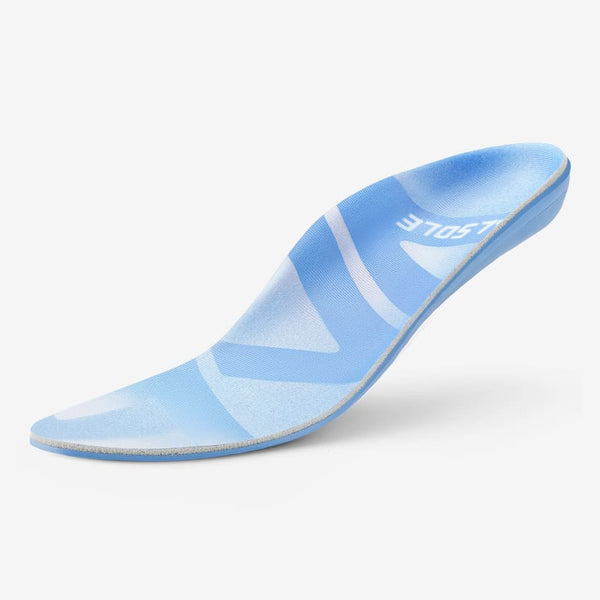
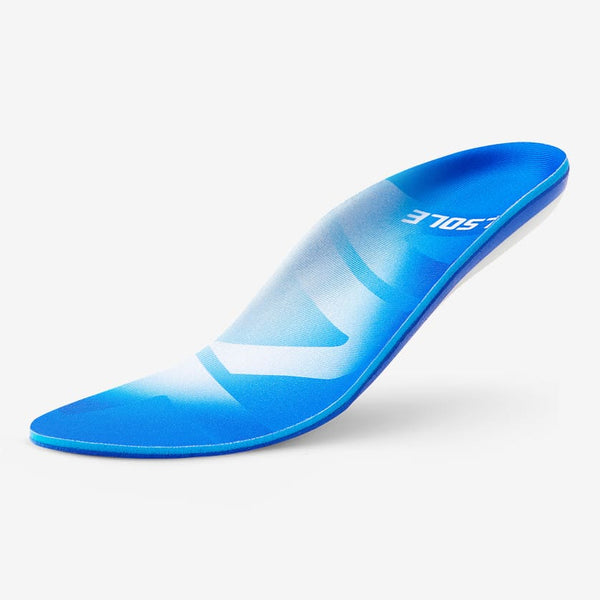
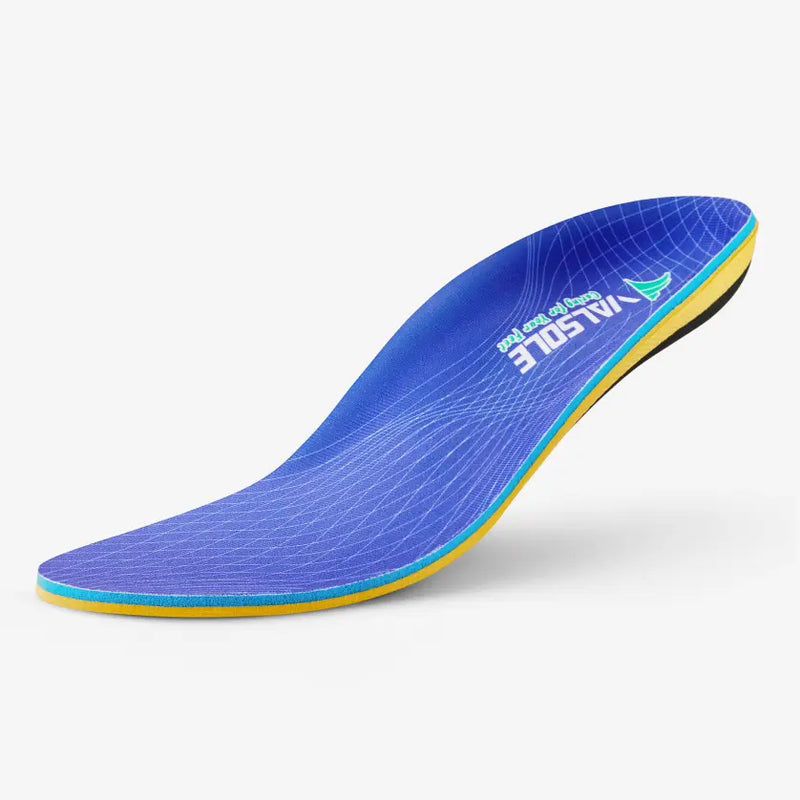


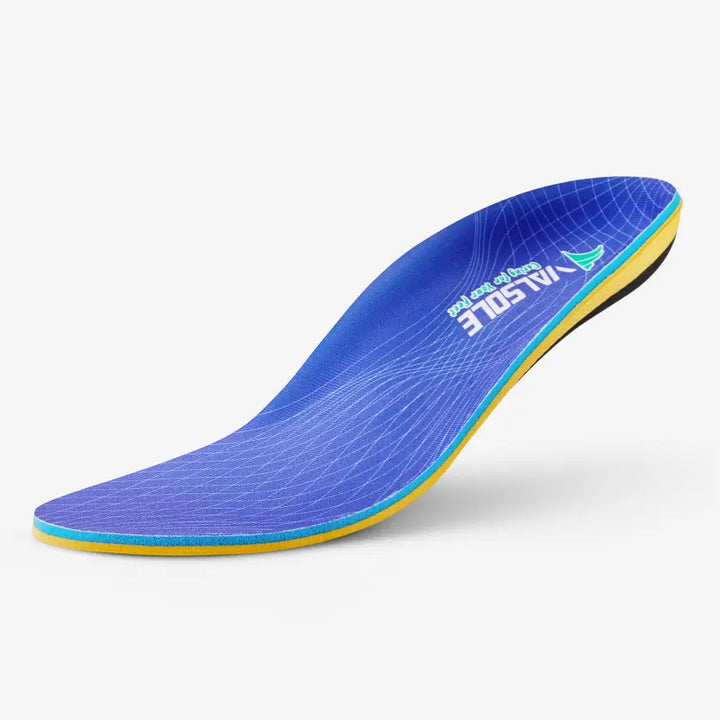
Heavy Duty
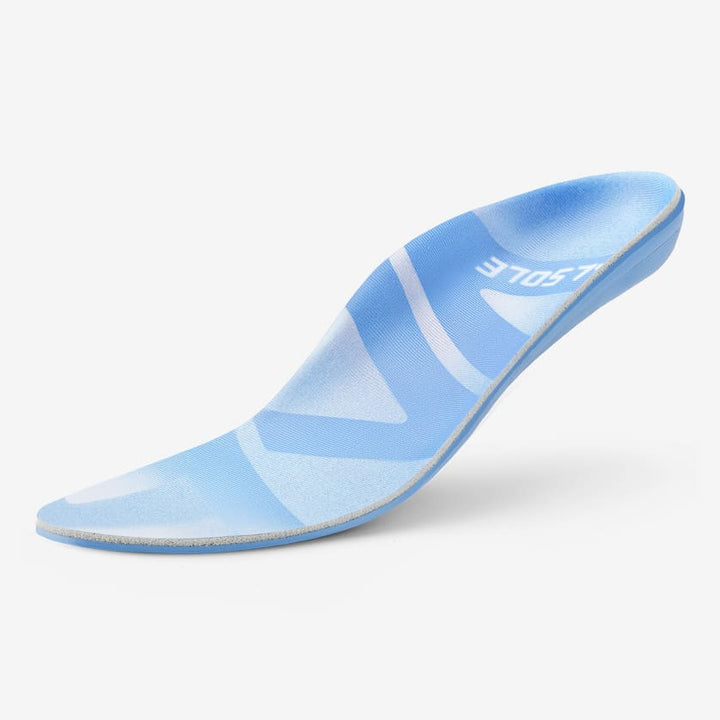
Heavy Duty is VALSOLE's firmer in-shoe support path for long standing, work boots, and...
$35.98$39.99
View product


Human locomotion subjects the musculoskeletal system to repetitive ground reaction forces that accumulate over time, contributing to fatigue, microtrauma, and chronic discomfort. This article examines the biomechanical burden of daily movement and the critical role insoles play in mitigating strain. By exploring arch mechanics, kinetic chain alignment, shock absorption materials, and pressure redistribution, it demonstrates how properly engineered insoles enhance structural stability, reduce tissue overload, and preserve long-term mobility. Integrating advanced cushioning polymers with targeted support systems enables improved posture, reduced injury risk, and sustained pain-free performance. Insoles are not merely accessories but foundational tools for biomechanical resilience.
Every step generates force. Not a trivial amount, but a multiple of body weight transmitted upward through the skeletal framework[1]. These ground reaction forces reverberate through joints, tendons, and connective tissues with mechanical precision. In isolation, each step is harmless. Repeated thousands of times per day, however, the stress becomes cumulative and insidious.
Over months and years, repetitive loading without adequate shock attenuation accelerates wear patterns in the musculoskeletal system[2]. Cartilage thins. Tendons stiffen. Muscles fatigue prematurely. Pain emerges not as a sudden catastrophe, but as a gradual mechanical reckoning.
The human foot is a biomechanical marvel composed of 26 bones, numerous articulations, and intricate ligamentous networks[3]. It is not a rigid platform but a dynamic tripod engineered for both flexibility and stability.
During gait, the foot transitions from a supple shock absorber at heel strike to a rigid lever at toe-off. This adaptability enables efficient propulsion. Yet such versatility requires structural integrity. When arch mechanics falter or alignment deviates, the system destabilizes. The consequences cascade upward.
Intrinsic cushioning mechanisms—fat pads, plantar fascia elasticity, and muscular co-contraction—are remarkably effective. But they are not inexhaustible[4]. Aging, overuse, high body weight, or unsuitable footwear can overwhelm these protective systems.
When biological shock absorption declines, mechanical supplementation becomes essential. Insoles serve as auxiliary architecture, reinforcing compromised structures and restoring equilibrium to the foot-ground interface.
Pain rarely originates from a single event. More often, it stems from microscopic tissue damage accumulating over time. Repetitive strain induces microtears within fascia and tendons[5], initiating inflammatory cascades.
This phenomenon—subclinical microtrauma—reduces tensile strength and impairs recovery capacity. The result is persistent soreness, stiffness, and diminished endurance. Pain is not the enemy. It is a diagnostic message.
Biomechanical misalignment at the foot alters tibial rotation, knee tracking, and pelvic orientation. The kinetic chain operates as an integrated continuum; distortion at its base reverberates through its entirety[6].
Overpronation may induce medial knee stress. Supination can amplify lateral ankle instability. Subtle asymmetries compound with repetition. Without correction, inefficiency becomes habitual.
What begins as mild discomfort can evolve into functional limitation. Plantar fasciitis, Achilles tendinopathy, patellofemoral pain, and lower back strain often share a common denominator: inadequate foundational support[7].
Early intervention interrupts this trajectory. Proper insoles recalibrate mechanics before pathology consolidates.

Arch support is not about rigidity; it is about calibrated resistance. Effective insoles employ contoured shells that preserve the medial longitudinal arch while permitting natural flexibility.
By redistributing plantar pressure across a broader surface area, these structures reduce localized overload[8]. The load-sharing effect diminishes strain on vulnerable tissues. Balance is restored.
The subtalar joint governs inversion and eversion [9]—movements critical for terrain adaptation and propulsion. Excessive motion destabilizes alignment.
Deep heel cradles anchor the calcaneus, moderating rotational excursions. This stabilization optimizes force transfer from heel strike through midstance. The gait cycle becomes smoother, more economical.
Uniform cushioning is insufficient for complex biomechanics. High-impact zones require resilient absorption, while stability regions demand firmness.
Multi-density construction addresses this disparity. Softer polymers attenuate peak forces[10]. Firmer substrates maintain structural integrity. Together, they dissipate energy efficiently and reduce neuromuscular fatigue.
Modern insoles leverage advanced polymeric matrices such as EVA and PU. These materials exhibit viscoelastic behavior—absorbing force while rebounding with controlled elasticity.
Energy return enhances propulsion efficiency. Shock attenuation reduces strain. It is a calculated interplay between compliance and resistance.
Inferior materials degrade rapidly, losing thickness and responsiveness under sustained load. This phenomenon, known as compression set, compromises support integrity[11].
High-quality insoles are engineered for dimensional stability. They retain structural form despite prolonged pressure cycles, ensuring consistent performance over time.
A neglected yet vital factor is the in-shoe microclimate. Excess moisture increases friction, elevating blister risk and microbial proliferation.
Breathable top layers and moisture-wicking fabrics regulate temperature and humidity. The result is not merely comfort but dermatological protection.
Industrial workers, healthcare professionals, and retail employees endure extended periods of weight-bearing activity. Static standing generates sustained joint compression and muscular fatigue.
Supportive insoles mitigate this burden by distributing pressure evenly and maintaining postural alignment. Productivity improves. End-of-day soreness diminishes.
Athletes subject their bodies to repetitive, high-magnitude forces. Running alone can involve thousands of impact cycles per session.
Performance insoles reduce peak plantar pressures and enhance shock diffusion. Muscular efficiency increases. Recovery accelerates. Endurance extends.
Individuals with higher body mass or heavy-duty occupational demands require reinforced structural capacity. Standard cushioning often collapses under elevated load.
High-density arch frameworks and robust heel platforms provide the necessary fortification. Stability persists where lesser systems would fail.
Preventive biomechanics focuses on reducing excessive mechanical stress before tissue breakdown occurs. Insoles function as proactive safeguards, attenuating repetitive strain and preserving joint integrity.
The objective is sustainability, not temporary relief.
Posture is a dynamic equilibrium, continually adjusted through proprioceptive feedback. When the foot is aligned, upstream segments require fewer compensatory corrections.
The spine remains neutral. Hips track symmetrically. Movement becomes fluid and efficient.
Pain-free mobility is not accidental. It is engineered through deliberate support and intelligent design. Insoles that integrate structural reinforcement, advanced cushioning, and durable materials create a foundation for resilient locomotion.
Movement should be liberating, not limiting. With properly designed insoles, each step becomes a testament to biomechanical harmony—steady, supported, and free from unnecessary strain.
[1] Novacheck, T. F. (1998). The biomechanics of running. Gait & Posture.
[2] Nigg, B. M., & Wakeling, J. M. (2001). Impact forces and muscle tuning. Journal of Biomechanics.
[3] Ker, R. F., et al. (1987). The spring in the arch of the human foot. Nature.
[4] Wearing, S. C., et al. (2006). The pathomechanics of plantar fasciitis.
[5] Buchbinder, R. (2004). Plantar fasciitis. NEJM.
[6] Khamis, S., & Yizhar, Z. (2007). Effect of foot hyperpronation on pelvic alignment.
[7] Milner, C. E., et al. (2006). Biomechanical risk factors for tibial stress fracture.
[8] Bonanno, D. R., et al. (2012). Effect of foot orthoses on plantar pressure.
[9] Kirby, K. A. (2001). Subtalar joint axis and rotational equilibrium.
[10] Verdejo, R., & Mills, N. J. (2004). Cushioning properties of footwear materials.
[11] ASTM International. (Standard Test Method for Compression Set of Flexible Cellular Materials).
Shop the products most relevant to the support path discussed in this article.

Keep reading with symptom-based guides and compare support options for your pain profile.


Loading size guide…


