




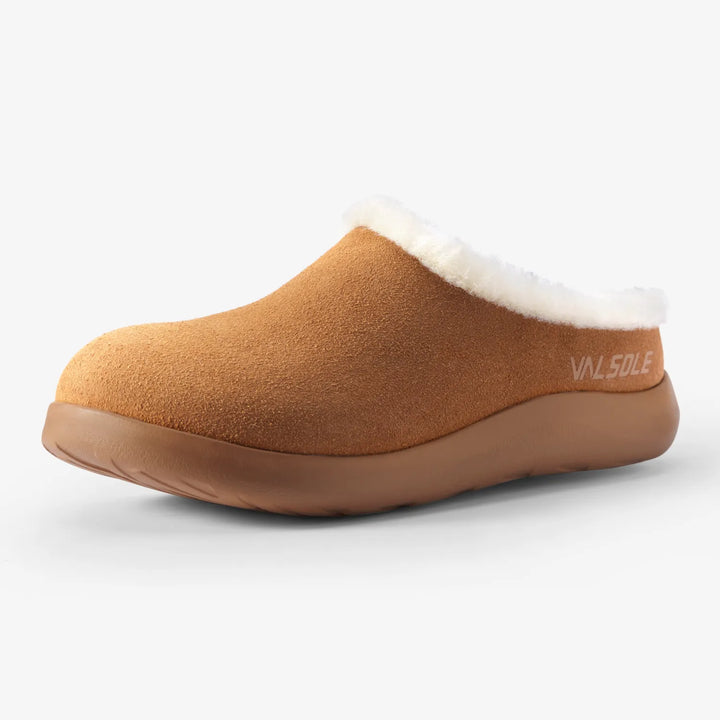
Hearth Clog
The Hearth Clog provides structured everyday stability and thermal comfort for users 220 lbs+,...
$59.99$89.99
View product


For wide feet, comfort improves most when forefoot volume is protected before adding support intensity. If toe space is compromised, even high-quality support can trigger pressure compensation and fatigue. The best setup keeps toe splay natural, controls heel motion, and distributes load without squeezing the forefoot during long wear.
Think of fit as the foundation and support as the amplifier. If the foundation is wrong, amplification makes problems louder.
Use this checklist to assess whether a shoe-support combination will remain comfortable after several hours, not only in a short fitting session.
| Category | What to verify | Green flag | Red flag |
|---|---|---|---|
| Fit volume | Toe-box width and depth after insert | No crowding by end-of-day | Numbness or lateral pressure |
| Upper + base materials | Adaptive upper + stable platform | Low friction with controlled motion | Soft upper on unstable base |
| Support profile | Arch guidance + heel control balance | Stable gait without forefoot squeeze | High support that steals forefoot room |
Wide feet generally benefit from uppers that adapt without collapsing and midsoles that stay stable under load. Overly soft stacks may feel comfortable initially but can increase inward drift and pressure hotspots after fatigue sets in. Controlled cushioning with structural consistency usually performs better for all-day use.
Material choice should serve mechanics. Choose combinations that preserve shape through your full activity window.
The most common errors are sizing longer instead of wider, adding thick insoles without re-checking depth, and treating softness as the only comfort metric. These mistakes often create delayed discomfort that appears after several hours, which is why short tests can be misleading. Re-check fit with your actual socks and daily load conditions.
Correcting one mistake early can prevent weeks of trial-and-error product switching.
Track three indicators: forefoot pressure score, heel stability during turns, and end-of-day fatigue location. Keep the setup that improves all three together. If support improves heel symptoms but toe squeeze worsens, keep the support intent and switch to a wider/deeper platform first.
The best wide-feet setup is the one you can wear long enough to get real benefit, not the one that tests best for five minutes.
For next steps, use the Wide feet comfort guide for fit diagnostics, compare supportive daily options with Hearth Clog, and browse broader shape options across All products before committing to one profile.
Shop the products most relevant to the support path discussed in this article.
Keep reading with symptom-based guides and compare support options for your pain profile.


Loading size guide…


