

What changed
A January 2026 open-access study in Sport Sciences for Health looked at how footwear influenced entropy in senior gait, adding new language to an old practical issue: older adults often need shoes that improve confidence and movement quality, not only comfort. Even if most shoppers never use the word entropy, the real-life meaning is clear enough. Footwear can change how steady, repeatable, and controlled each step feels.
That makes this more than a style or softness story. It gives mobility-focused footwear a stronger evidence-backed angle, especially for older adults, caregivers, and families trying to reduce uncertainty around daily walking and balance.
Why it matters now
Senior footwear is often sold with vague language about cushioning and ease. But for real buyers, the bigger concern is more practical: does the shoe create a more confident, stable step pattern over the course of daily life? If the answer is yes, then footwear has value beyond comfort alone.
This is especially important for older adults dealing with lower activity confidence, changes in foot shape, or fear of unstable footing. It also matters for caregivers who need easier comparison criteria than “this one looks supportive.”
How buyers should read the study
The study does not mean every older adult needs the same shoe. It does suggest that stability deserves more attention as a buying category. A deeper, more secure base, predictable heel hold, and a shape that supports rather than crowds the foot can all become more valuable with age.
For many readers, the simplest translation is this: if a shoe or slipper helps movement feel calmer, steadier, and less tentative, that is already a meaningful performance benefit. It may also reduce the trial-and-error that happens when people chase softness but still feel unstable.
What it means for product comparison
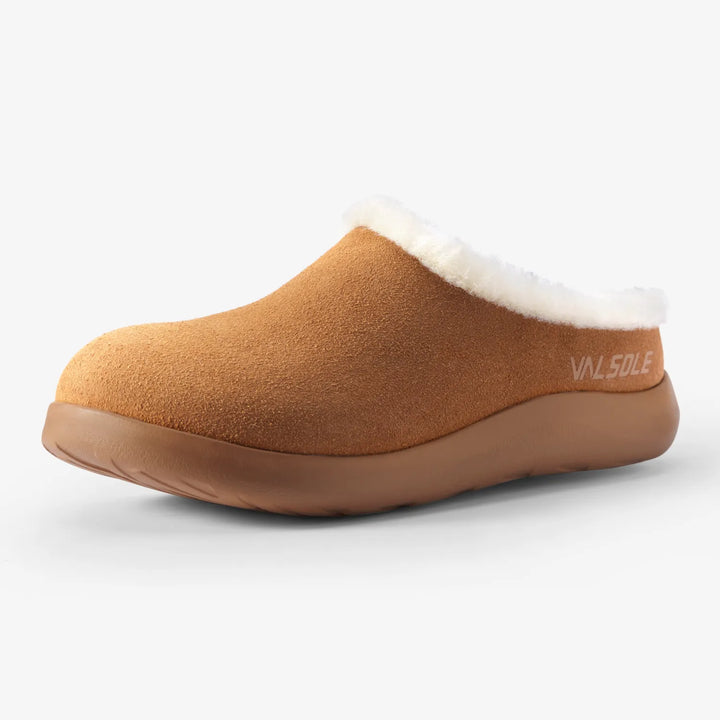
The best comparison lens is not “medical versus non-medical.” It is “confidence and support versus uncertainty and collapse.” Indoor footwear matters here too. If someone spends many hours at home on hard floors, the support conversation should include slippers and clogs, not just outdoor walking shoes.
That creates a useful bridge between research and real shopping behavior. A stable home option, a roomy fit, and a clear sizing path can matter just as much as whatever shoe gets worn outside.
Where shoppers can start
Readers can start with the wide feet comfort guide if forefoot shape is already a problem, compare home-first support through orthopedic slippers, and use the FAQ to resolve common fit and break-in questions before ordering.